
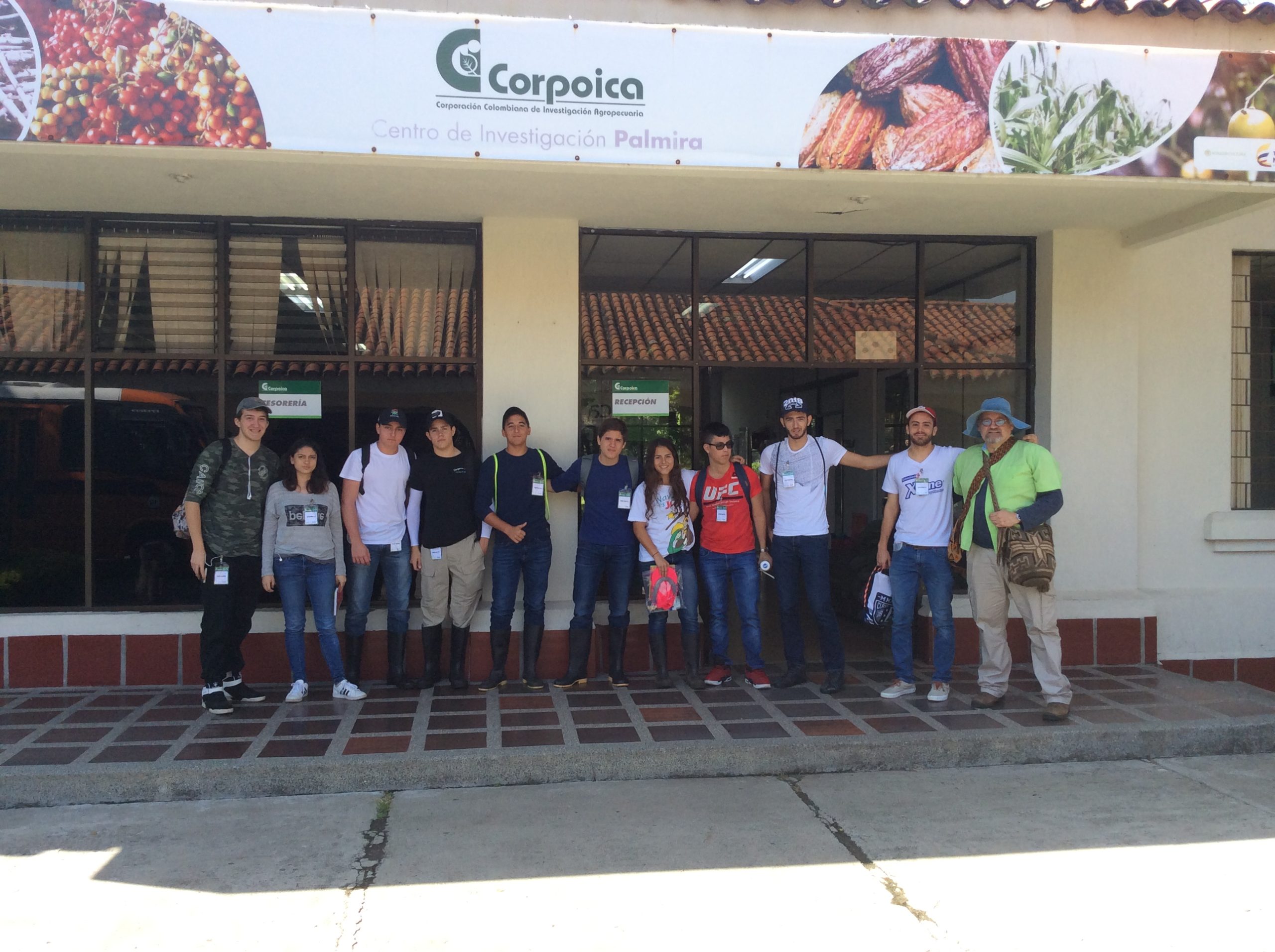
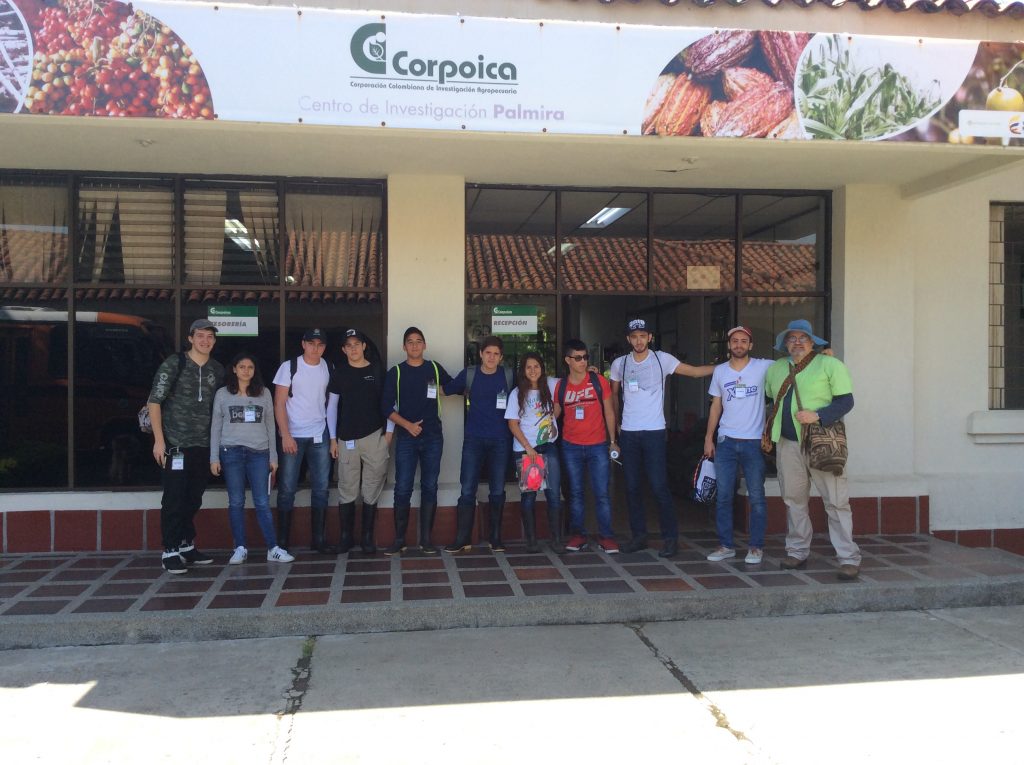
On the 26th September ten agricultural students and one agricultural teacher got on a Colegio Bolivar School bus and travelled to Palmira to an agricultural research station.
CORPOICA (Corporacion Colombiana de Investigacion Agropecuaria) sede Palmira is the agricultural research station funded by the Colombian Government, based in Valle Del Cauca. CORPOICA has sites 19 sites across the country and conducts research into a diverse selection of agricultural domains. The Palmira site conducts research into tropical fruit species, cacao, cassava, guava, chontaduro, pineapple, pitaya, and has genetic banks of Musaceae (plantains and bananas), Cacao, and the Harton Del Valle breed of cows. It also conducts a wide variety of other research. Please visit http://www.corpoica.org.co/menu/qhc/ to see the work that CORPOICA conducts.
The trip had been planned with the intention of providing students with experiences based in agricultural research with a focus on genetic diversity and adaptability. Three fields of research were visited: genetic diversity and genetic improvement in cacao, Theobroma cacao; the live genetic bank of Harton Del Valle, a bovine breed adapted to conditions in Valle del Cauca, through natural selection, since its introduction in the 15th century with conquistadores; and the genetic bank of tropical fruit tree accessions (numbering over 120) coming from the tropical regions of the world.
During the cacao presentation, given by Marisol Cano, and Dr Xavier Argout of CIRAD (Centre de coopération internationale en recherche agronomique pour le développement), students were shown cacao growing in the field and saw different types of cacao displaying variation in pod colour, size and shape.
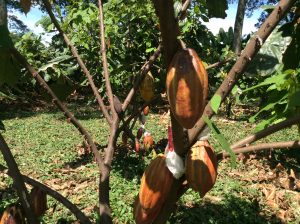
Pods were opened, and the mucilage inside the pods was tasted.
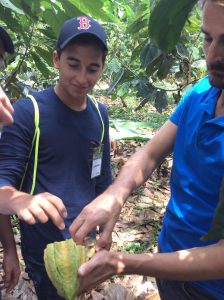
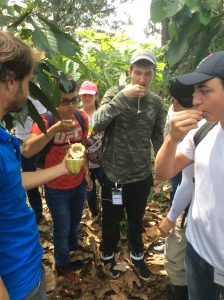
Students tasting raw cacao beans
Students were taught the basics of how pollination in the field was controlled, and conducted in order to maintain pure breeds and hybridize new cacao.
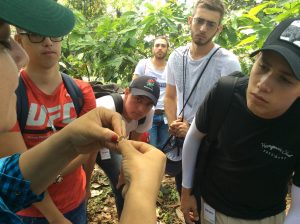
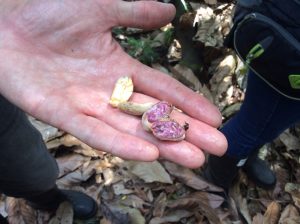
Students were shown variation in seed colour from the same cacao pod and probed to explain how this could happen.
Students openly asked questions of the researchers and a good discussion ensued. Students were shown the cacao nursery and told how to germinate seeds and propagate plants, and how vegetative propagation was conducted.
Following the excellent field presentation by Xavier and Marisol, students visited a selection of Harton del Valle cows.
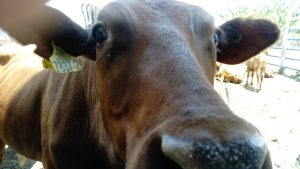
Dr Sonia Ospina led the discussion about Harton Del Valle with input from David Quintero, Dr Luis Fernando Vargas (vet), and Jesus Eliomar Mosquero.
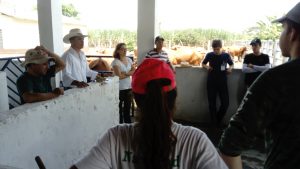
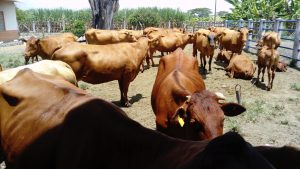
A question and answer session about why the genetic bank existed, the benefits of this breed in Valle del Cauca, how it was adapted to the environment, and how the genetic bank was managed to provide sufficient numbers of cattle for research and accession, was followed by students entering the cow pen and being shown the physical characteristics of the breed.
The final part of the day was spent in the Tropical Fruit Tree Arboretum. German Aguilera, took us through the collection of trees.
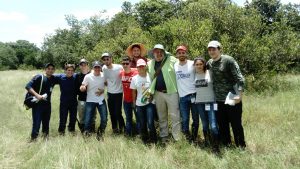
Students sampled a variety of fruit, collected seeds, asked about germination and had fun walking through the trees. Common and not so common fruits were encountered. Of great interest was the Miraculous berry bush (Synsepalum dulcificum) which when tasted changed the taste of sour and bitter fruit, such as lime, into sweet tasting deliciousness.
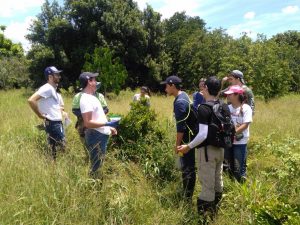
Students collected seeds and headed back to the bus.
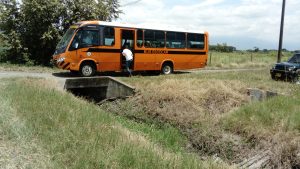
It was an excellent visit. We thank and appreciate CORPOICA´s scientists for taking the time to show and discuss agricultural research with us.
In November CORPOICA Palmira hosts AGRONOVA, an event highlighting the agricultural research conducted by CORPOICA across the country in its 19 stations. This is well worth a visit by people interested in agriculture. If you want further details please contact Dr Waliszewski or follow the link to information about the event.
Agronova 2017:
https://www.youtube.com/watch?v=tekdRtWsuLI