

As part of the Agricultural Plant Science course I have always tried to take students on a field trip; I believe it important to expose students to real-life operations of what we are learning and practicing in my agricultural class, especially considering the importance that agriculture still has in Valle del Cauca and Colombia.
I have taken students to the Agrícola Himalaya tea plantations near Cali that produce Té Hindu; The AGROSAVIA – Corporación colombiana de investigación agropecuaria Agricultural Field Station in Palmira where we have seen collections of cacao, plantain and their arboretum of tropical fruit trees; and a sweet potatoe farm.
Yesterday I took my students to INDUSTRIAS ALIMENTICIAS EL TREBOL S.A. near Tulua in Valle del Cauca: the largest industrial producer of panela in Colombia, that markets its products nationally and globally.
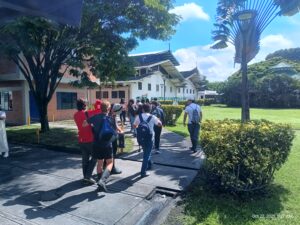
Students interacted with the raw material throughout the day. They were told and then shown in-situ in the sugar cane fields, how it is grown, managed and harvested.
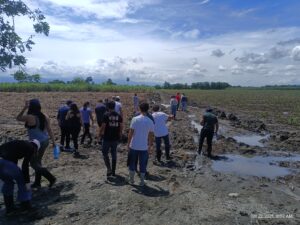
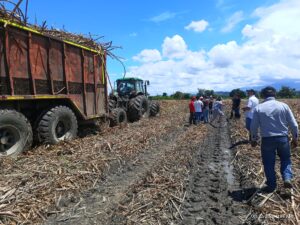
Questions were asked all the time, students were engaged, and importantly they were shown how one of the major employers in the region, the sugar cane industry, works. In the field they were shown the method of collecting cane, transporting it to the sugar mill and then how this raw product was processed to the final product – panela.
The fact that students were exposed to science (chemistry and biology), agriculture, economics, business, engineering, all in a real life scenario was excellent for them. Automation at scale needed to run a successful international business was eye opening, as was seeing the manual labour needed to produce such an excellent product.
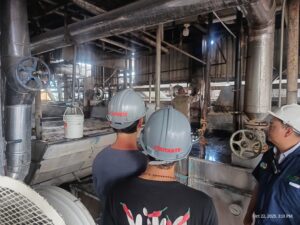
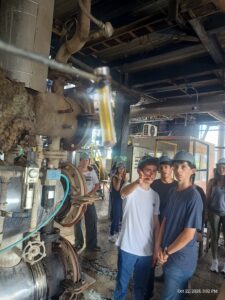
Students interacted with all members of the business, from the owners and managers, to the field technicians and factory supervisors, to the workers making the panela and the field hands cutting the sugar cane.
They saw what it meant to work in an environment that values the well-being of its employees as a fundamental part of its operations and how this motivates and results in employees who enjoy going to their daily work.
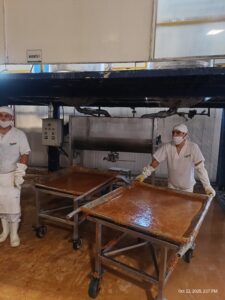
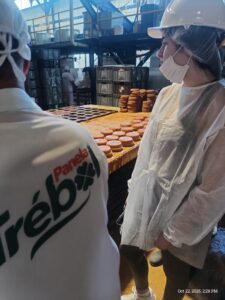
I know that field trips are now no-longer employed as much as they used to be, understandably so, but I would say that these are integral to preparing our students to real life situations in their local areas, giving them experiences that will stay with them for life, and in some cases enthusing them to follow and focus on a certain area of interest for their future.
As a teacher the extra bonds created during field trips, such as extracting a student from a muddy patch as there boot slowly gets drawn into the mud, are experiences that are valued by students and teachers alike.
My sincere thanks to hashtag#KikoBarrios and all at INDUSTRIAS ALIMENTICIAS EL TREBOL S.A. for being such excellent hosts and giving my students and I an experience we shall not forget.