
A NEW YEAR: Year 7 2022-23
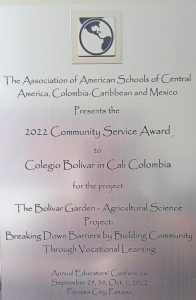
This year is the Diamond Jubilee of the school, and quite rightly the Bolivar Garden wants to celebrate this in its own special way. As well as educating 21 students this year in the agricultural plant science elective two large projects are in the pipe-line: the first is to plant at least 75 cacao trees, the second is to catalogue the flora of Colegio Bolivar and produce a special 75th anniversary edition of the Flora of Colegio Bolivar. In addition to this, following the Bolivar Garden´s successful submission to the Tri-Association’s Community Service Award, a new irrigation system is being planned and renewal of the first terrace with raised beds. Our new Greenhouse will soon be in production and Bolivar Garden Saturdays (BGS) will be once per month during the school year.
Seventy-five Cacao trees for 75 years of Colegio Bolivar.
This initiative which is still in the planning stages stems from the knowledge that we have cacao trees already at CB, which produce fruit. The climate and environment will allow for cacao to flourish, and with good management we should hope to be producing our first Don Simón Chocolate in six to eight years.
Agriculture students have already started pegging out where the cacao plants and mid-term shade trees (plantain and others) will be planted. This continues and we hope to have this concluded within a month.
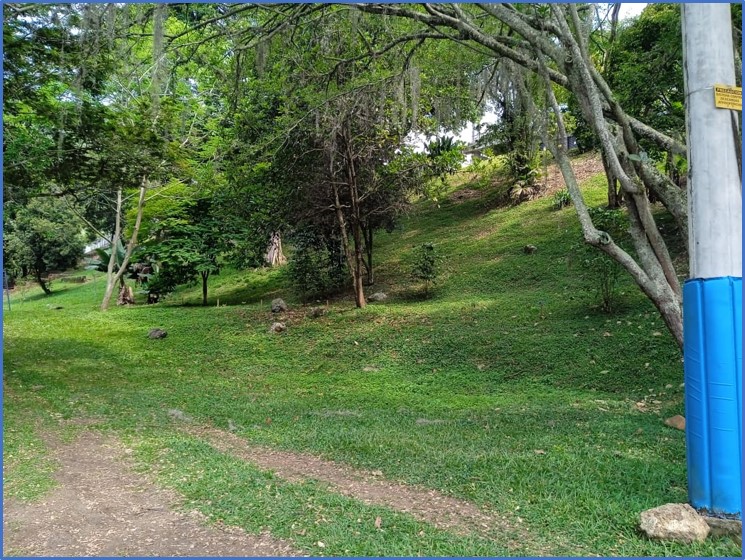
Therefore, we wish to involve our younger students, from 4th and 5th grade in the planting of these trees, which should be producing fruit by the time they reach graduation.
The project is hoped to involve local research agencies, to supply germplasm and technical expertise in the planting of the cacao trees, and on-going advice as to how to manage and maintain the mini-plantation.
It is hoped in the future that the processing of the fruit to chocolate will be led by the agriculture class but also with views to further entrepreneurial classes.
The census project – FLORA OF COLEGIO BOLIVAR
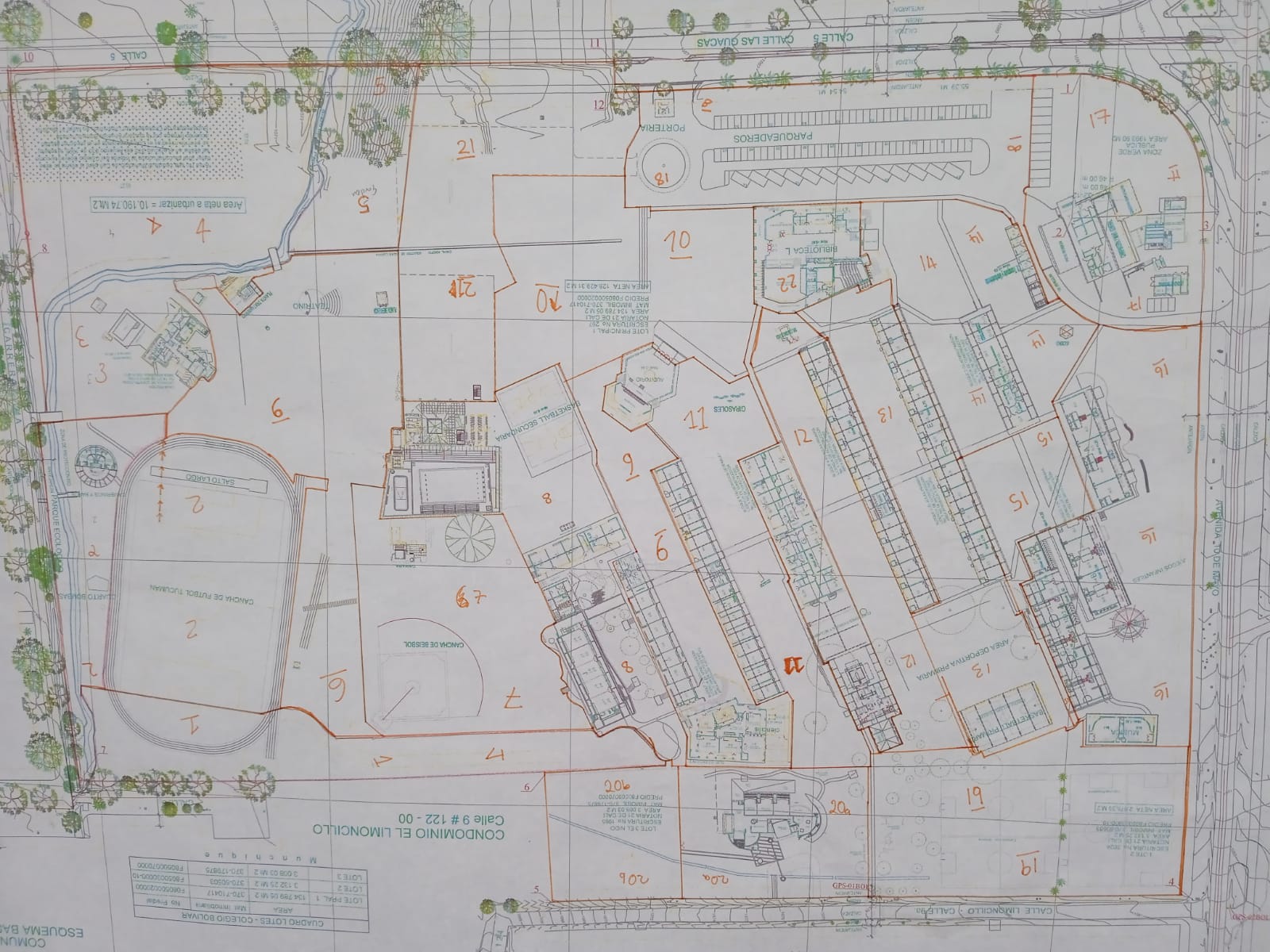
It has been said many times, especially by visitors that we have one of the most impressive campuses if not in South and Central America, then the world. Part of the reason for this is the inclusion of so much natural flora and fauna. It is does not just make it a nice campus, it makes a place to want to learn, to want to teach, to want to bring your children to and a place to enjoy. Therefore, this year the agricultural plant science elective is going to catalogue every tree/palm species on campus, every ornamental plant, every type of grass and other flora that is present within our 14 hectares.
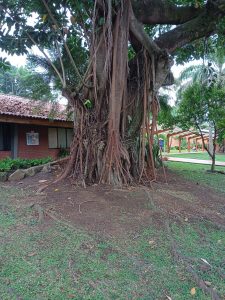
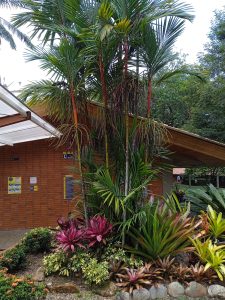
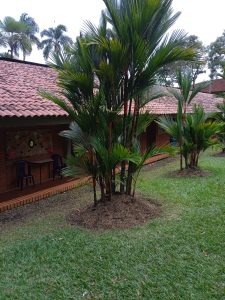
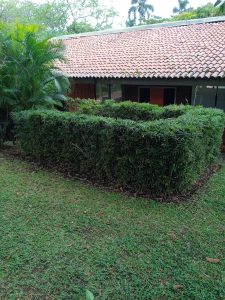
This is just a small variety of the trees that students will be measuring
This work is being conducted by the 21 students in the elective together with Dr Luz Amalia Forerro of Universidad de Tolima and Universidad de Valle, a forestry and agroforestry expert who works in Bajo Calima with forestry students. She together with Mr Andres Sierra, a CB parent and forest engineer will teach my students the necessary skills to measure the trees on campus, help with the identification of them, and then allow our students to conduct research into every species documented.
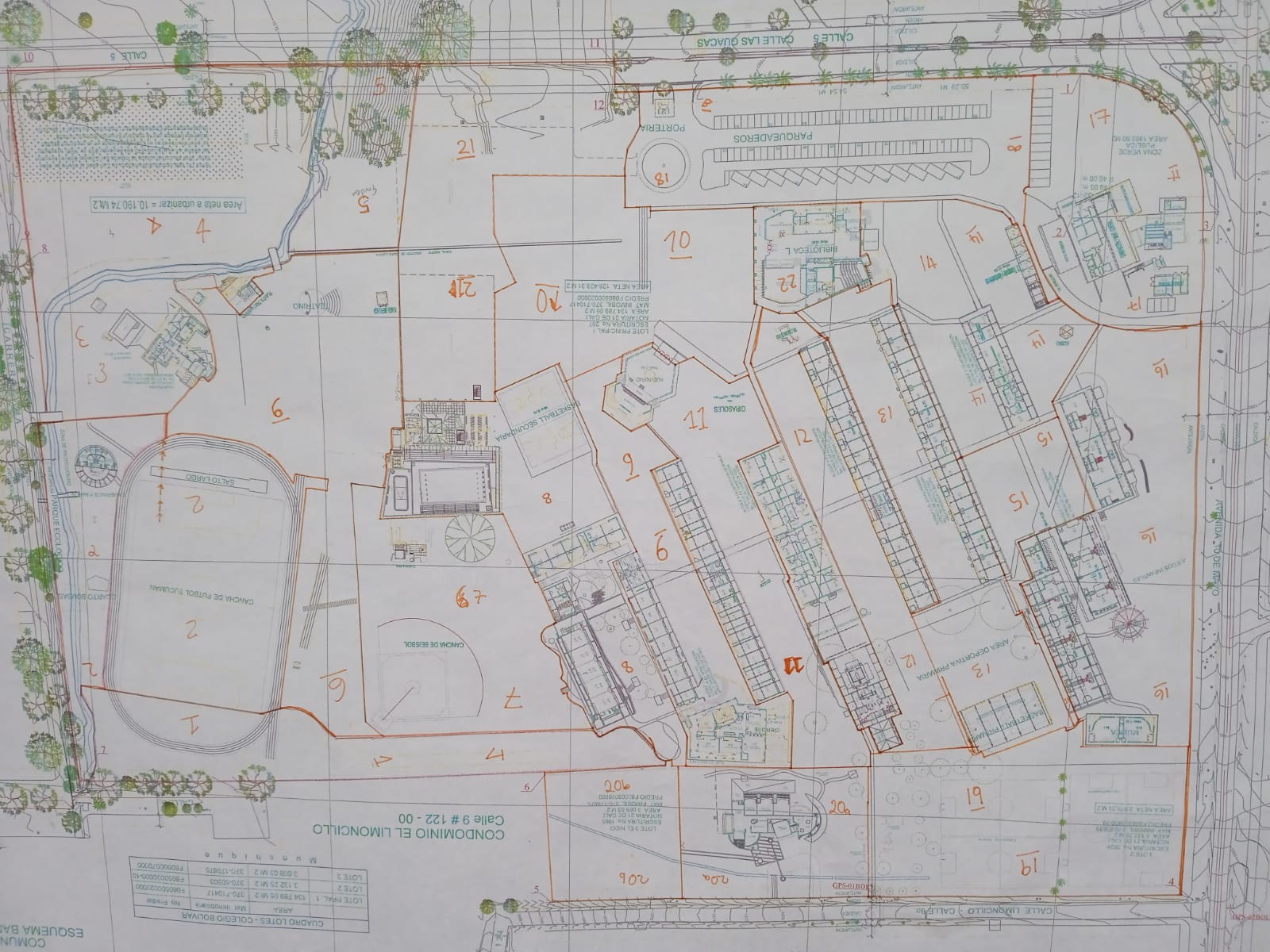
With these data, students will work with our advisors to work out the amount of carbon that is being sequestered at Colegio Bolivar, a first step to working out the school´s carbon footprint and how close we are to carbon neutrality. In conjunction with the graphic design and art department a book “The Flora of Colegio Bolivar” will be produced, with input from my students.
The book is intended to be part “coffee table book”, a celebration of the flora we have in CB and also an educational resource describing methodologies, taxonomies, species, and other metrics as well as describing the phenology (growth habits), requirements and uses of species described in the flora. We are looking into the possibility of setting up a dedicated website where all information will be available.
Irrigation system and renovated terrace
With our prize money from the Tri Association Community Service award, US$1000.00 we hope to install a new automated irrigation system for the Bolivar Garden. This will include using the existing infrastructure – two 2000L tanks and tubing – and will be augmented by a sprinkler system for the coffee plot, an above ground, drip feed system for the planned cacao plot, both directly fed by a hydraulic pump, and two independent, automated systems for the greenhouse and the new renovated terrace. There will be additional water taps placed at strategic points in the garden.
The terrace will have an overhaul. We intend to level it, and place 12 raised beds, which will be irrigated with the new system. We hope that funds will allow the purchase of material to complete the terrace. We still have netting left over from the greenhouse project so we intend to enclose some if not all the terrace to prevent damage by iguana and other animals.
Don Simón Coffee
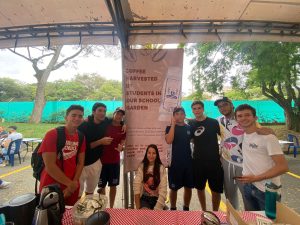
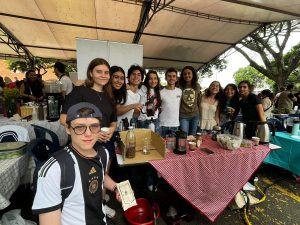
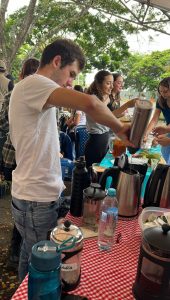
This continues to be our most productive part of the garden. This year we shall plan and possibly execute the first phase of a pruning system which will ensure constant production in the mid to long term. This process, known as, Rock n´ Roll, will be advised by Fernando Oka, of Okafe Roasters, and Dr Philippe Vaast, of Cirad. The Don Simón Coffee Club continues to market and sell our coffee raising funds for ongoing purchases of organic material and items needed for the garden.
Greenhouse project
Within the next few weeks and with BGS involvement we hope to finally finish filling our 13 colourful beds with rich organic matter so that we may start planting a variety of vegetables. Initially we shall begin with maize, tomatoes and cucumbers for gherkins, and diversify to produce all sorts of salad vegetables and cucurbits. Before we place the irrigation system we shall be required to hand water the beds.
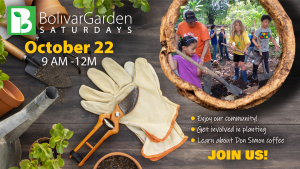
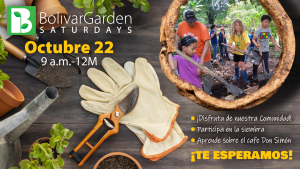
These are our ambitious plans for the year 2022-23. Notwithstanding we shall obviously reach out to all school sections to bring their students down to the garden to learn from what is going on and extend our invitation to other groups and activities that are run within the school, from Social Service to Sinergia and beyond to GIN classes. We may not succeed in all these proposed activities but we shall try our best, and if it takes a bit more time, so be it, we shall get there.
This blog is also going to be written much more by my students, explaining what they are doing and what projects they are working on. So look forward to reading their experiences.
And, finally, if you want to get involved with the Bolivar Garden, or the Agricultural Plant Science elective, either by presenting to the class, teaching an area of expertise, sharing your knowledge or donating plants, time, or materials please feel free to contact me through the following emails: wwaliszewski@colegiobolivar.edu.co and if you are a student and want to learn more about the project please email me at wwaliszewski@colegiobolivar.org
Dr. Wojtek Waliszewski
October 2022