
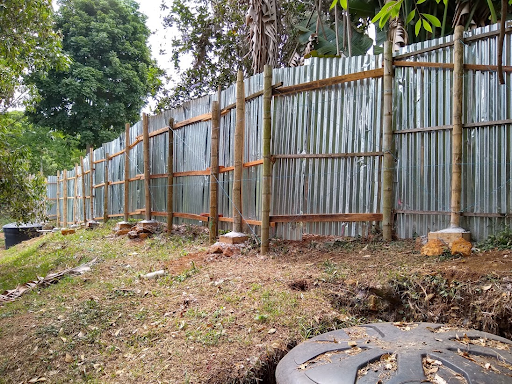
After the main jobs such as, fixing the terraces, getting rid of the undergrowth in the coffee plants and the hotbeds, were done, we proceeded to work on the bean plantations.
As always we tried to use the materials that we had at hand, in this case we used a wall of bamboo and tin, built for the protection of the students due to the new construction project that takes place on school.
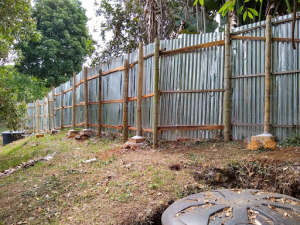
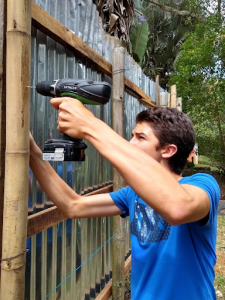
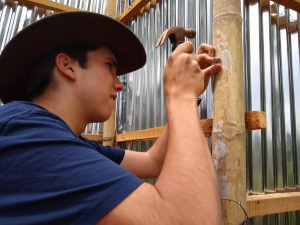
We began with the installation of ropes to allow future plants to grow and become entangled, this is a skill present in bean plants. These ropes were installed with a form of cross, and later a vertical rope that was tied delicately to the stem of each of the plants, so that it would be easy for the bean seedling to get entangled in them.
The Bolivar Garden volunteers helped us with the preparation of the land and the sowing of the seeds. A few days later we began to see the plants germinate.
Since then we have been watering this area constantly, and looking for signs of possible insects that could eat the plants.
Unfortunately as they grew, we noticed that there were regions with taller plants, with more leaves and a slightly darker color, of equal measure there were totally opposite regions. To identify the cause of the problem we looked for patterns of which we find that the most affected regions had; a greater number of hours of light, a drier land, and higher temperatures, that is why our goal in the second semester is to plant a tree or install a small roof that decreases the amount of light that reaches these plants decreasing the temperature and maintaining more soil moisture.
Additionally, on inspection of the beans on our return from our winter recess, we noticed that all the plants had died. It had been an exceptionally dry winter season with no rainfall, and with no irrigation system in place we could not water the plants.