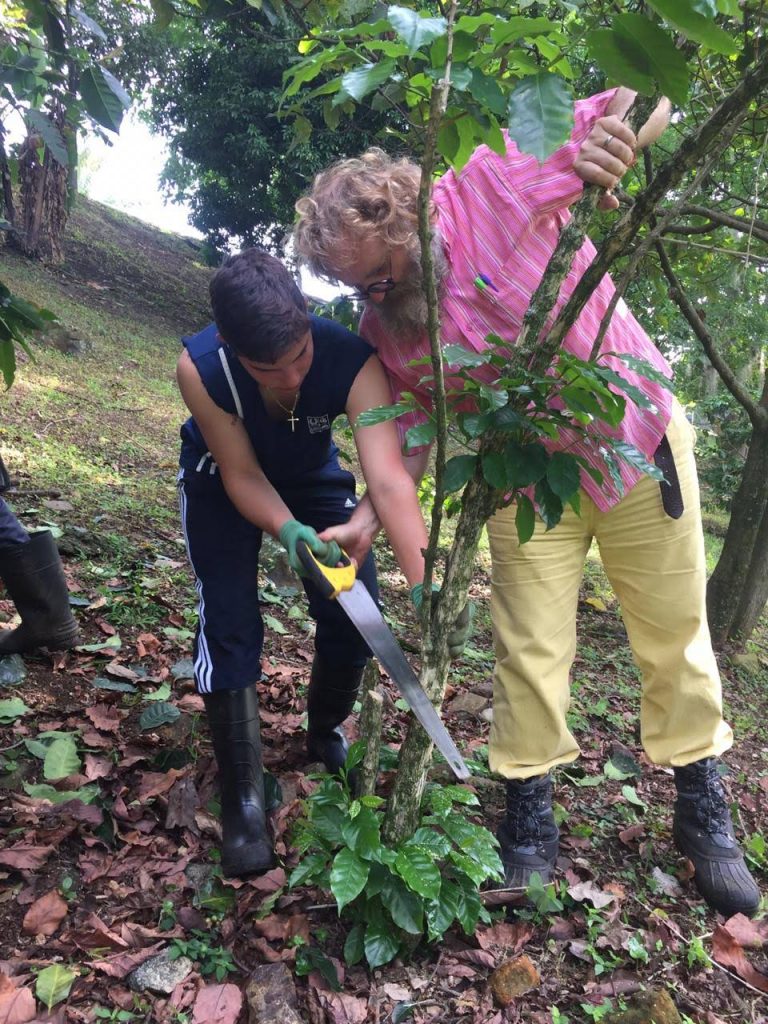
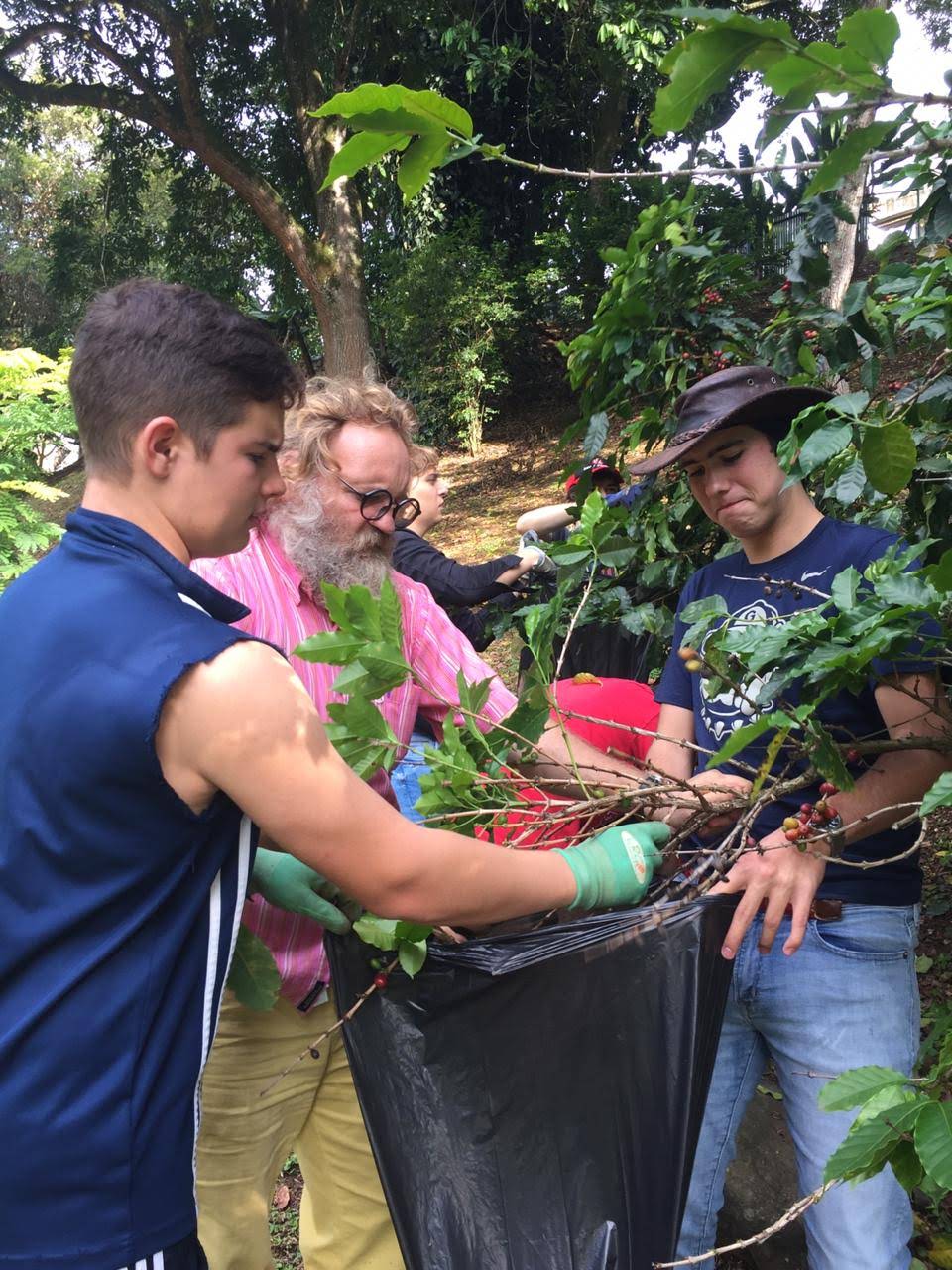
There are 115 recently planted coffee trees in our Colegio Bolivar Garden, which we are going to process to make Colegio Bolivar coffee. These coffee trees have not yet started to bear any fruit, but have started to flower. We want to make sure that these are free from disease and attack from parasites, and we want to do this using organic cultural management practices.
There were some older coffee trees close to the garden which were infected with and being attacked by a parasite that affected our trees. This parasite is better known as the coffee berry borer, scientifically known as the Hypothenemus hampei, is probably the most common pest that affects coffee crops worldwide and probably affected our crop due to the height above sea level on which we grow our coffee.
In order to prevent our new crop from being attacked by the coffee borers already present near to the garden we had to take some drastic measures.
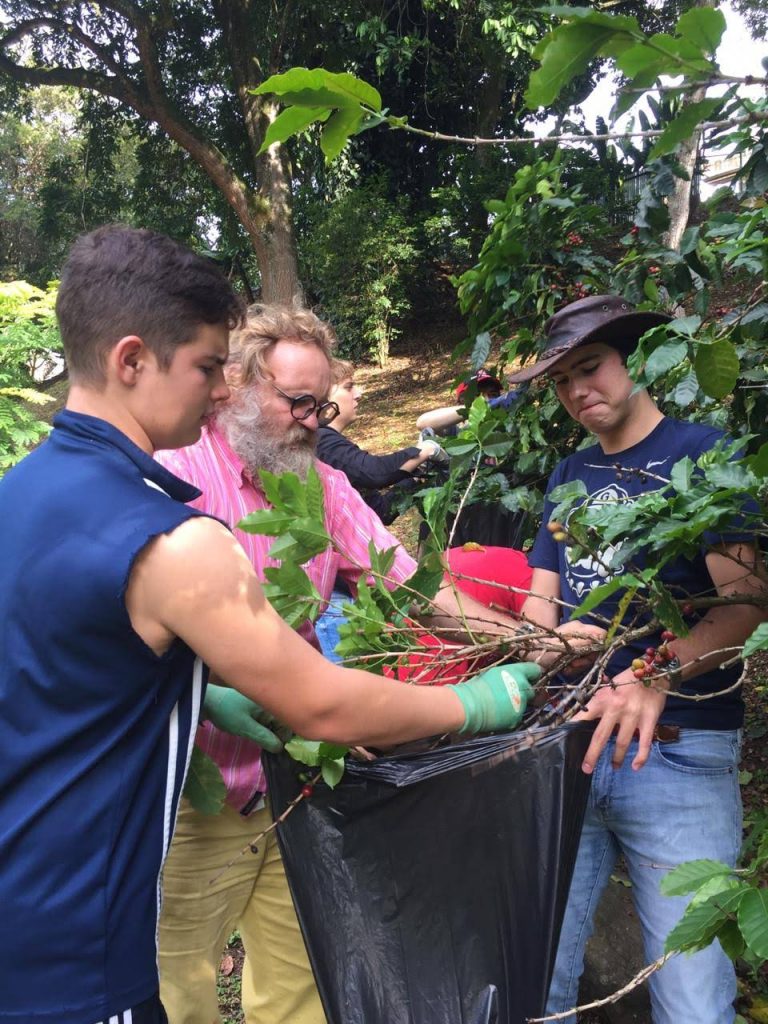
We had to remove all the coffee fruit from the plant, known as coffee beans, because they had already being attacked by the coffee borer. Beans that had already matured, the red ones, were taken to the lab to process into coffee. The green beans were collected and disposed of. In this way we removed the food from the borers. We also collected fruit from the ground, as this is a reservoir for the coffee borer too.
Then we had to cut the trees back, so that they could grow again. This was a drastic measure, but one that we had to do to ensure future production of the trees. and we were also giving the trees a chance of producing fruit in the future. The method we used to save our coffee plants is a great method considering that we did not used any fumigation nor agro-chemicals, and are called cultural practices.