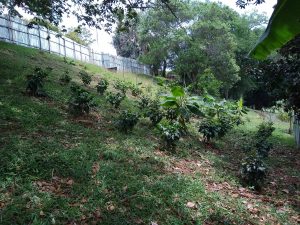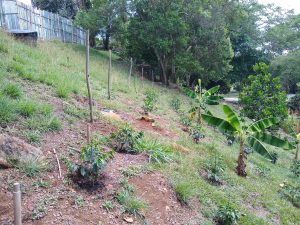
In the past few months, the garden has been shaping up nicely, having coffee, garlic, ornamental tomatoes, carrots, citronella, papaya, plantain, and other plants that this class has planted. However, there was an extreme need for shade along all of the garden, where plants were receiving constant sun. For this reason, the class previously incorporated plantain, which would be able to provide shade to some of the coffee plants in the course of the year. This was very effective, however the class and Dr. Waliszewski considered it was important to provide the plantation with more shade, which Mata Raton (Gliricidia sepium (Jacq.) Kunth ex Walp.) could provide.
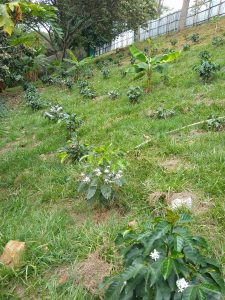
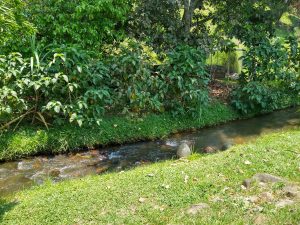
Having trees in the garden is an extreme necessity, because they provide the soil with strength, bring nutrients to the soil, and provide shade to smaller plants, which might not have as much resistance to the sun. We had previously initiated this conservation process by planting Nacedero (Trichanthera gigantea (Humboldt & Bonpland.) Nees)) along our stream, which is a nitrogen fixing plant, providing our soil with beneficial nitrogen, and fixing notrogen into the leaves of the plant. Fixing this nitrogen, provides an incentive for insect species along the garden to settle and reproduce, which is crucial in order to maintain pollination and a healthy environment in the garden. The leaves can be removed periodically, about every four months once the tree is established, without harming the plant: these leaves can then be decomposed to add nitrogen to organic compost.
Gliricidia sepium is a tree which can grow 2-25 meters, making it ideal for providing shade to our garden. Not only will it provide our coffee with shade, but the leaves that fall off will provide a protective layer, along with a protective barrier on the ground. However, we could also collect these leaves and use them for compost. For this process, we received a donation of stakes from La Hacienda, which were cut from existing trees by Sr. Leonardo Mosquera, which were then collected by the school.
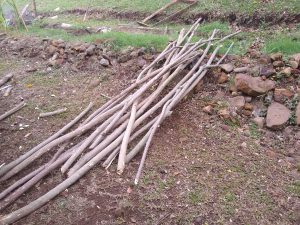
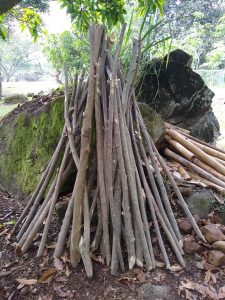
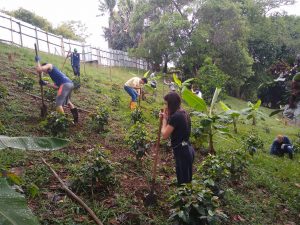
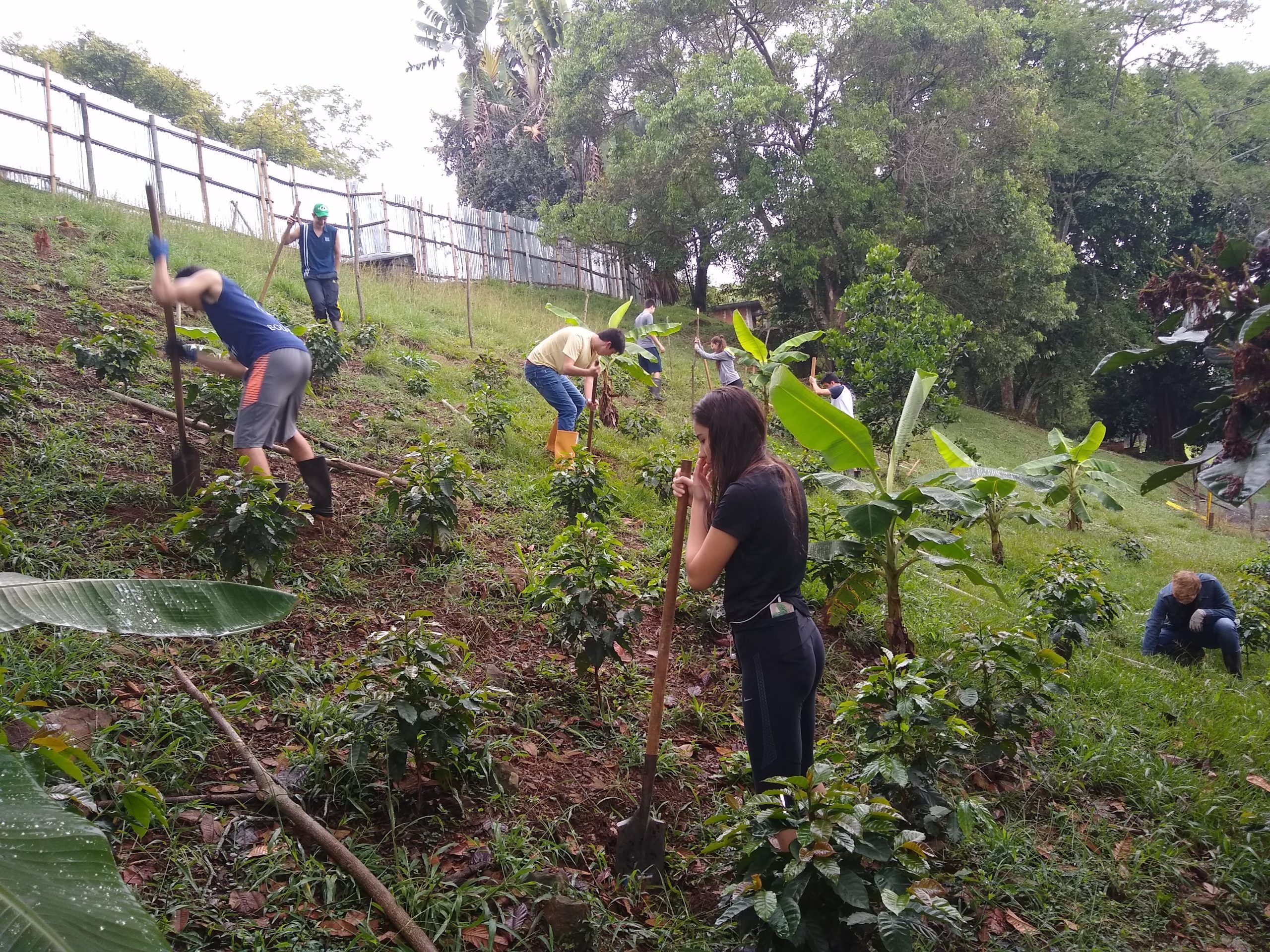
The stakes were then cut by volunteers during a Bolivar Weekend, and planted during the following week by our class. In order to plant them, we had to dig 30cm x 30cm x 30cm holes evenly spaced along the plantation, in which we then placed the stakes: holes were filled with a mixture of the soil that was removed plus a rich organic manure. They were well watered. Along the digging process, most of us encountered rocks, which slowed down the digging process significantly. We planted around 20 stakes, but we still have many that still need to be planted.