Discurso Dedicado a los Graduandos
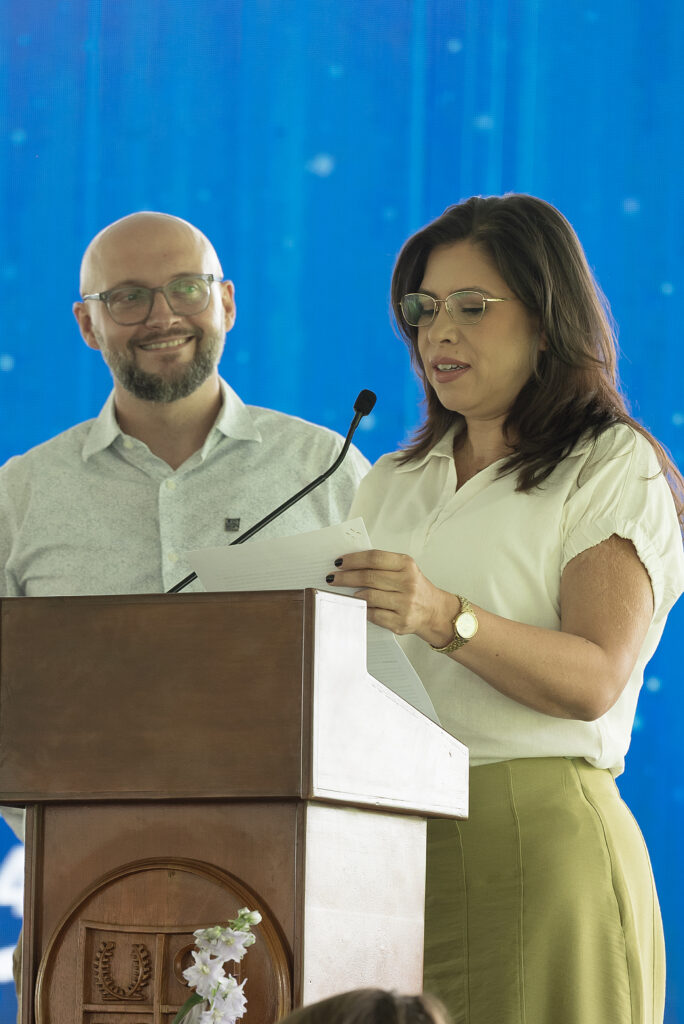
Carmen and I will be doing this speech in both languages.
As a history teacher, I spend a lot of time thinking about civilizations: what makes them great, why they fall, and most importantly, what they leave behind. Long after their monuments crumble and their achievements become textbook footnotes, their legacy remains. While preparing these remarks, I realized that the Class of 2026 has built its own civilization here at Colegio Bolivar. Like great civilizations, you’ve fought your own battles for survival—through Binational competitions, Copa de Amistad rivalries, and countless challenges along the way. And every student mattered, from the one who always participated in class discussions to the one who brought chaotic energy wherever they went, each of you was an essential part of the legacy you created here. And like civilizations from the past, you also have left behind your ancient artifacts: misplaced laptop chargers, messages carved into desks, and at least one Personero campaign sticker. Eduardo Bellini and Tomás Olano, you’re still planning to remove that from my wall, right?
Además de un legado representado en recuerdos, proyectos, reputación y huella; vivieron una historia compartida: años de experiencias, conflictos y logros. Crearon normas propias: reglas oficiales y reglas sociales no escritas. Formaron jerarquías: líderes, grupos populares, mediadores. Desarrollaron una cultura: chistes internos, tradiciones, frases, estilos y recuerdos comunes. Tuvieron rituales: entrega de la chaqueta, ceremonias, despedidas, senior week. Construyeron identidad colectiva: “somos la promoción de los melos” repetían constantemente. Enfrentaron crisis: exámenes, conflictos, cambios, pérdidas, presión académica. Se dividieron en comunidades: grupos por intereses, amistades, deportes, gustos y pasatiempos. Y ahora, se preparan para expandirse, como una civilización que migra, cada estudiante sale hacia nuevos territorios.
Like any civilization, this one was made up of distinct groups that gave it character. First, The Senators—those who elevated classroom discussions: Juan Felipe Salazar, Laura Uribe, Antonia Orjuela, Sebastián Figueredo, Martín García Sancho. Then came The Ambassadors, who represented Colegio Bolivar through leadership and character: Santiago Caicedo, Sofía Ramos, Manuela Valcȧrcel, Lucía Rodríguez, and Valeria Soto. But every civilization also needs its free-thinkers, The Keepers of Chaos, who made every class interesting and unpredictable: Martin El Khoury, Lucas Ramírez, and Eduardo Bellini.
We also had The Victims of Monday Mornings—Yael Corkidi, Mariana Cubillos, and Pablo Calero—who always seemed surprised that school started so early and they ultimately arrived, it felt like a celebration. Closely related were The Time Travelers, who operated on a unique interpretation of the bell schedule but were always extremely friendly when they made it: Juan Martín Moreno, Juan Martín Estrada, Francisco Coral, and Martín Saucedo. And of course, The Lords of Procrastination, who turned last-minute submissions into an art form but would always come through in the final countdown: Sara González, Miguel Díaz, Andrés Arango, Martina Wartenburg, and Tomás Olano.
Respecto al lenguaje y a la comunicación, podemos reconocer a los escribanos: excelentes para registrar información, ejemplos de rigurosidad en su quehacer, entre ellos, Sofía Beuth, Valeria Gómez y Luciana Herrera. Los mensajeros y cronistas: encargados de registrar en tribuna y en tribuweb los acontecimientos de la civilización, periodistas por tradición y por convicción, Joshua Barney, Jerónimo Muñoz, Gabriella Palau, Federico Garcia y Daniel Cano. Mientras que otros, detrás de la túnica de la discreción, fueron maestros en comunicar conocimientos, valores y tradiciones, como Gabriela Ruíz y Martín Caicedo. Y levantando la voz, tenemos a los oradores: capaces de enfrentar al público para convencer o informar: Gabriela Jaramillo y María Camila Borrero. Y esta sección la cierran los narradores: tienen gran imaginación, son creativos, expertos en el arte de contar mitos, historias y leyendas sobre su tarea: Sara Nicole Acosta, Juan Pablo Cabal, Luciana Chavarro, Tomás Pardo, Valeria Sánchez.
A civilization also needs creativity. Our Artists inspired others through music, design, and performance: Andrea Rodríguez, Alejandro Cardona, Samuel García, Lucía Escobar, Violeta Rodríguez, and Martina Ramírez. We also had our Philosophers, students who asked thoughtful questions long after class ended: Matías Urrea, Isabella Garay, Daniela Tovar, and María José Cabrera. Every civilization has its champions, and ours were the Athletes of the Empire: Manuela Londoño, Isabella Pulido, Samuel Parra, Agustín Garcés, and Samuel Castro. But what would a civilization be without its good times? Our Entertainers kept every classroom memorable: Jerónimo Dueñas, Yoel Kadoch, and José Tomás Bermúdez.
En esta estructura social es necesario nombrar a los eruditos del reino: como Mariana Ortiz, Emilia Losada, Joaquín Tomás Jaramillo, Daniel Cortés y Mariana Sánchez; cercanos a ello están los estrategas y ejecutores: Emilio Paparo, Juan Jacobo Cifuentes y Juan David Londoño. No menos importantes son los consejeros de los gobernantes, observadores, comunicaban ideas, advertencias y estrategias a los líderes: Pablo Juan Karaman, Emilio Lloreda, Felipe Alejandro Vanegas y Juan Diego Sinisterra. Y para complementar, están las versátiles: excelentes en todas las tareas que emprenden, sensibles, artistas, humanistas y científicas: Luciana Correa y María Escobar.
Además, toda civilización necesita sus guardianes, aquellos que velan por el bienestar de todos, por ejemplo, los que alimentan no solo el espíritu sino también el estómago, los guardianes de las recetas sagradas, les gusta cocinar y lo hacen bien: Alejandra Giraldo, Hanna Jalil y Matías Isaksen.
Every civilization depends on those who care for others. Our Humanitarians were Nicole Arias, Maria Paula González, and Mariana Yusti who showed deep concern for the needs of those around them. Alongside them were the Bearers of Light, students whose positivity made everyone’s day better: Pablo Gómez, Samuel Barona, Pablo de Angulo, and Alejandro Gónzalez. But we also had The Rebels, those who never felt obligated to follow the crowd: Felipe Camacho, Jorge Assis, and Lucía Duque. Then there were The Wanderers, who never allowed classroom walls to limit their adventurous explorations of the school hallways: Julián Arellano, Simon Posada, and Juan David Garay. Also, we had our Citizens of the Alternate Computer Tabs, who developed lightning-fast reflexes, mastering the art of instantly switching their computer back to the lesson whenever a teacher was near: Alejandro Arabia, Iñaki Gutiérrez, Camilo Cedeño, and Sebastián Aristizábal. And finally, The Guardians of the Laser Pointer—Thomas Rebolledo, Jerónimo Navia, Joaquín Aguirre, and Gonzalo Arenas— whose could always locate and play with my laser pointer no matter where I hid it. We may never know who shined it up into Dr. Wojciech’s second-floor classroom during history class, but I certainly have my suspicions.
Si la historia nos enseña algo, es que las civilizaciones son recordadas menos por sus victorias y monumentos, y más por las ideas, los valores y las personas que dejaron huella en quienes vinieron después. Y eso también es cierto para la promoción 2026.
You will be remembered less for the tournaments you won or the high grades you achieved, and more for the impact you had on those around you—the conversations, the inside jokes, and the relationships you built along the way. Though each of you played a different role in this civilization, you all helped shape its legacy: one defined by resilience, a little productive chaos, humor, and above all, your kindness and humanity. We congratulate you, Class of 2026, and promise you that the legacy you built here will stay with us for many years to come.
Carmen Helena Moncada and Mr. Chris James Martin